How old are we really?
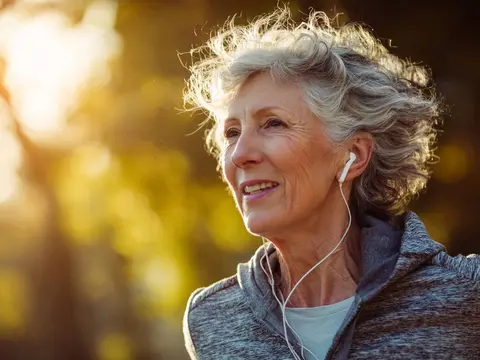
Ageing is a highly individual process. An international consortium coordinated by researchers in Konstanz has developed a method that uses biomarkers to determine a person's biological age - a valuable tool for research on ageing and the development of new approaches in preventive medicine. Is it possible to draw conclusions about an adult's physical condition on the basis of their age? The answer is: "It depends." On the one hand, it is well known that the body's ability to function decreases with age, while the risk for age-related illnesses increases over time.
However, two people with the same age can also differ considerably in their physical ageing and health. A person's chronological age and their biological age are only connected to a certain extent. This is because biological age reflects a person's actual physical ageing process and depends on different factors such as their lifestyle, genetics and environment. Yet how can we determine biological age as precisely as possible?
This question is the focus of the international MARK-AGE consortium. In a cross-sectional study conducted across Europe, the researchers identified age-related changes in ten key blood values (biomarkers) of men and women respectively. These values make it possible to calculate a person's biological age. In a recent publication under the leadership of Maria Moreno-Villanueva and Alexander Bürkle from the University of Konstanz, the consortium put this "bioage score" to the test and used it to identify additional clinically relevant biomarkers linked to biological age.
Thus, the MARK-AGE consortium used the approach of developing a separate combination of biomarkers for each sex that can be used to calculate an individual person's biological age. To this end, the researchers analyzed data on about 3,300 study participants from eight European countries, and the team recorded 362 different biomarkers on each participant. After analyzing this comprehensive data set, the team selected ten key biomarkers per sex that were used to calculate the bioage score of each person - a value reflective of a person's biological age. Indeed, the scores showed that the difference between the biological and chronological age ("age difference") is significantly larger in people with trisomy 21 - a genetic disorder that is also tied to a faster ageing process.
On the other hand, women over 50 who received hormone replacement therapy were biologically younger than those who did not. For women who smoke, the "age difference" increases with the total number of cigarettes smoked over the course of their lifetimes, i.e. smoking accelerates ageing in women from the MARK-AGE population. "Against the backdrop of current research on the ageing effects of smoking, hormone replacement therapy or trisomy 21, all of these results are plausible and confirm the validity of our bioage score", Bürkle explains.
Overall, the study provides important findings for determining biological age while opening up new opportunities - in ageing research as well as in medicine. "Reliable biomarkers for biological ageing provide key tools for tracking the ageing process - even in healthy individuals - as well as for identifying people who have a higher risk of developing an age-related illness or physical impairment. This could open doors for new approaches to individualized preventive medicine", Bürkle concludes.