Why So Many Announced Games Vanish Into Development Limbo
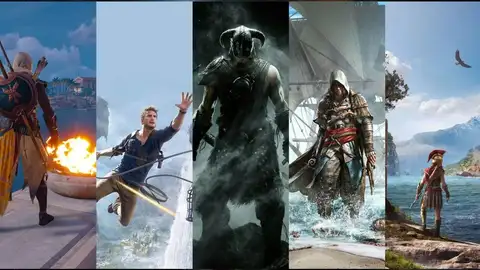
Why do so many announced games vanish into years of silence? From shaky production plans to layoffs, reboots, and shifting publisher priorities, this breakdown shows why big titles stay trapped in development limbo far longer than expected. In the past, when games were delayed due to scheduling issues, it might just mean that the game's release date had slipped. Nowadays, most of the time when games are delayed, there is a larger issue at play.
Games are frequently announced long before they are ready for development or have developed enough for a realistic path to their ultimate release. This is why there are so many major franchises that sit in some sort of limbo status right now. They aren't necessarily canceled, but they aren't actually ready to be shown to anyone either. Some are being worked on without anyone knowing about it, while there are others that appear to be experiencing various financial difficulties, layoffs, structural changes, questioning of funding, shifting priorities of publishers, etc., and what appears to be one giant mess of "development hell" is really a collection of very different production problems.
Here is a snapshot of the major games still pending based on the source material. A reveal trailer used to be a pretty good way to create some buzz and momentum for an upcoming game. These days though, it can also be used for lots of other things like trying to attract top talent, calm down investors, give a hint at what your platform is going to look like, or just keep a major franchise out in the public eye. For the publishers, that might be good news, but it creates a whole different problem for the players.
A game can get announced before the team has even sorted out how big it's going to be, who's actually going to be working on it, or even what tools they're going to be using. Once that happens, though, any quiet year just adds to the feeling that the project is slipping further and further behind even if people are still working hard on it in secret. The Elder Scrolls 6 is probably the best example of a reveal outliving any realistic release expectations. Beyond Good & Evil 2 is another one; the name is still out there even though the actual game is nowhere near ready yet.
AAA game development has always been a bit of a mess. The thing that's changed is the timeline. If a game has been in production for five years or more, then any little setback starts looking like a disaster. People leave the project.
The team gets reorganized. They change the tools they're using. The budget goes up. Sometimes they even partially reboot the whole thing.
Take BioShock 4, for instance -- apparently, it got completely overhauled. Ark 2, meanwhile, just kind of drifted off in a completely different direction. Live-service games like Fairgame$ face another problem: by the time they're ready to launch, the market conditions have changed. And then there are the licensed games; those are always a bit more complicated.
Marvel and Star Wars titles need a ton of approvals and a lot of brand oversight so there's even less room for error. That's probably why we've seen so much caution around games like Iron Man, Blade, Marvel 1943, Eclipse, and Knights of the Old Republic Remake. The smarter move for the industry is pretty simple: announce later and show more. Until that happens, players should treat early reveals like a cinematic teaser before the HUD appears.
Looks cool, sure, but the match has not started yet. GG. More For You KRAFTON sees India as a place to build games not just play them Verizon VALORANT Game Changers NA queues up for Stage 1 Swiss Event Minecraft 26.2 Snapshot 3 adds sulfur spikes and sulfur cave damage